Onur Türk 🇹🇷 🇦🇿 Profile
Avatar is pending approval
Acerca de Mí
Bir hayalin varsa peşini bırakmamalısın. İnsanlar, kendilerinin yapamadıkları şeyleri senin de yapamayacağını söyler! :) 🇹🇷 🇦🇿
Música
- 201 archivos de música
- Ver todo
Blog
-
Investment scams often promise you can "make lots of money" with "zero risk," ...
-
Kripto Para Dolandır ıcılıklarından Nasıl Ka&ccedi l;ınılır? Dolandırıcılar, kripto para birimini kul...
-
Bugün 2008 yılında yazdığım bir yazıyı buldum. O zamanlar sinir olup kızıp yazmışım galiba.&nbs...· may. 21, 15:51
-
The conflict between Russia and Ukraine, now entering its fourth year, has resulted in heavy losses....
-
Europeans for Investment in Cambodia ! At the head of these scam farms are Chinese and Cam...
-
Modern Turkish Girl Names Start Here Having a newborn is one of life's most significant changes...
Pregunta Respuesta
-
Mağusa limanın'da hamal olarak çalışan Ali'nin hikayesidir. Teninin esmerliğinden dol...· nov. 19, 14:23
-
Republic Day in Turkey is indeed a day of great national pride and significance. The celebrations on...· oct. 29, 23:30
-
"K& ouml;ylü milletin efendisi dir." sözü, Türk milletinin önderi M...· oct. 25, 1:35
Detalles del Perfil
| Nombre y apellido | Onur Türk 🇹🇷 🇦🇿 |
| Género | Masculino |
| Mirando | Mujer |
| Años | 35 años |
| Fecha de Ingreso | 20/04/2015 |
| País | Turquía |
| Ciudad | Manisa |
| Educación | Universidad |
| Yo hablo | Inglés, Turco, Alemán, Español, Ruso, Rumano, İtaliano |
| ¿Cuál es su profesión? | Webdesigner |
| Nivel de ingresos | No es importante |
| Sobre mí | My name is Onur From manisa but I living in Romania, Bucharest. I am a webdesigner and manager. I know 7 languages. I like to travel and discover new countries 🇹🇷🇦🇿 |
| Estado civil | Soltero |
| Religión | Tengri |
| De fumar | Nunca |
| Alcool | Socialmente |
| Peso | 75-80 kg |
| Altura | 1.78 cm |
Amigos





Profile Snippets
Pagina principal
- No hay artículos
-
 2 more...
 Very Fast5 votes
Average6 votes
Fast3 votesene. 8, 4:540 14 2
Very Fast5 votes
Average6 votes
Fast3 votesene. 8, 4:540 14 2 -
ene. 5, 12:293 55 miembros gusta esto
- Bandera
 nov. 24, 13:13Turgut CanGood Morning my friend
- Bandera
 ene. 4, 5:54Annabel MaryHow are you doing
- Bandera
 ene. 7, 16:04Paul SchmidGuten Morgen zusammen! Ich bin Paul aus Deutschland.
 Tienes que iniciar sesión para comentar
 -
I was watching a movie with my brother tonight and I hear this song on the Movie.ene. 3, 4:182 2Honoré de Balzac y Paul Schmid gusta esto
 Tienes que iniciar sesión para comentar
 -
ene. 2, 17:450 2Honoré de Balzac y Paul Schmid gusta estoTienes que iniciar sesión para comentar
-
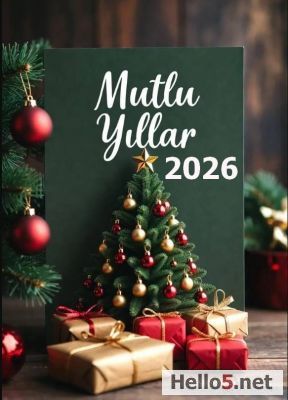
Onur Türk 🇹🇷 🇦🇿 uploaded 1 new photo to Newsfeed Photos albumHappy New Year 2026 #2026 #newyear - Mutlu Yıllar 2026 - La multi Ani 2026
 ene. 1, 1:082 44 miembros gusta estoTienes que iniciar sesión para comentar
 -
dic. 25, 15:462 2Kazım Soysuz y Paul Schmid gusta estoTienes que iniciar sesión para comentar
-
Onur Türk 🇹🇷 🇦🇿 commented on their videoAlmanya ya geldim, Abimin evinde çatı katında aklıma birden bu şarkı geldi neden bilmiyorum...dic. 21, 12:192 2Honoré de Balzac y Paul Schmid gusta esto
dic. 20, 14:01Almanya'da abinizle beraber güzel bir Noel tatili geçirip yeni yıla da keyifle girin inşallah Onur Bey, selamlar.
Tienes que iniciar sesión para comentar
-
dic. 12, 23:572 1Honoré de Balzac Le gusta estoTienes que iniciar sesión para comentar
-
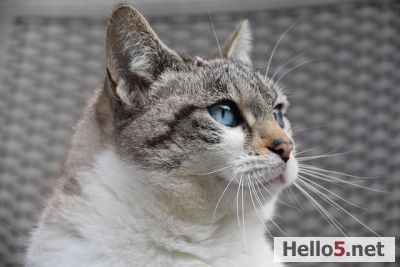
Onur Türk 🇹🇷 🇦🇿 liked Anna Tarasova's photoI love cats because I enjoy my home; and little by little, they become its visible soul
 dic. 10, 15:520 1414 miembros gusta estoTienes que iniciar sesión para comentar
 -
dic. 5, 13:095 2Onur Türk 🇹🇷 🇦🇿 y Paul Schmid gusta esto
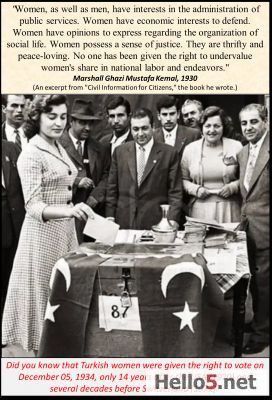
dic. 5, 10:30Did you know that Turkish women were given the right to vote on December 05, 1934, only 14 years after the USA (1920) and several decades before Switzerland (1971)?
 dic. 22, 16:25We are all too familiar with the betrayal that can turn a country into the most ignorant nation in the world overnight. The Latin alphabet..... anyway
dic. 22, 18:48So, you are one of those ignorants who are still unaware of the reality that when the alphabet reform was adopted on November 1, 1928, and prior to this, a census (October 28, 1927) had already determined the overall literacy rate in the country as 8.61% (3.67% for women and 12.99% for men). These figures are also used by the Turkish Statistical Institute (TÜİK). The literacy rate, which increased with the alphabet reform, has reached 90 percent today, and the real betrayal is to have facts cracked!So, you are one of those ignorants who are still unaware of the reality that when the alphabet reform was adopted on November 1, 1928, and prior to this, a census (October 28, 1927) had already determ...Ver más
dic. 22, 21:24Some more information for educational purposes:
dic. 22, 16:25We are all too familiar with the betrayal that can turn a country into the most ignorant nation in the world overnight. The Latin alphabet..... anyway
dic. 22, 18:48So, you are one of those ignorants who are still unaware of the reality that when the alphabet reform was adopted on November 1, 1928, and prior to this, a census (October 28, 1927) had already determined the overall literacy rate in the country as 8.61% (3.67% for women and 12.99% for men). These figures are also used by the Turkish Statistical Institute (TÜİK). The literacy rate, which increased with the alphabet reform, has reached 90 percent today, and the real betrayal is to have facts cracked!So, you are one of those ignorants who are still unaware of the reality that when the alphabet reform was adopted on November 1, 1928, and prior to this, a census (October 28, 1927) had already determ...Ver más
dic. 22, 21:24Some more information for educational purposes:
As the Ottoman Empire expanded its borders, from the mid-16th century on it began using an artificial written language called "Ottoman Tongue," a mixture of Arabic, Persian, and Turkish, written with Arabic and Persian script. Around the same period, as Turks were pushed from the center to the periphery, Turkish was relegated to a secondary role. Under the pressure of Arabic and Persian, and gradually lost its beauty and richness, yet it managed to survive among the people.
The widening gap between the written and spoken language in the Ottoman Empire became a subject of debate among Ottoman intellectuals in the 19th century; from the Tanzimat period onwards, the issue of reform in writing and language came to the forefront in the Empire. This was because the Turkish-speaking population could no longer even conduct their affairs in government offices within a system dominated by Arabic and Persian. Furthermore, it became very clear during the Ottoman modernization process in the 19th century that Ottoman tongue was not a language of science. Therefore, the necessity of coining new words arose. However, during these coinage efforts, Arabic, not Turkish, was taken as the basis; hence, this did not serve anything but increase the weight of Arabic words within Ottoman Turkish.
Sultan Abdulhamit II, who is sometimes claimed, only by those biased ones who have no serious background of knowledge whatsoever at all, to have "opened many schools," only managed to open 253 primary schools. Furthermore, these primitive schools never provided any scientific education. Primary education in the Ottoman Empire lagged so far behind that even when the new higher education institutions opened in the 19th century, there was still a need for "primary education courses" to prepare students for such an elementary-level education.
When the Republic was declared in 1923, approximately 37,000 of the 40,000 villages where about 80% of the population lived in Türkiye lacked schools and teachers, but in 1923-1924, there were 4,894 primary schools, 341,941 students, and 10,238 teachers. The Turkish Republic increased these numbers to 10,596 primary schools, 955,747 students, and 20,564 teachers in 1940-1941.
On the night of August 9, 1928, Marshall Ghazi Mustafa Kemal Atatürk announced the new alphabet to the public in Sarayburnu, İstanbul. as follows: “Effendis, we are adopting the new Turkish alphabet to express our beautiful language. Our sweet, harmonious, and rich language will reveal itself with the new Turkish alphabet. We are obliged to understand this necessity and free ourselves from the incomprehensible and unintelligible signs that have kept our minds in an iron frame for centuries ...”
In 1928, mixed-gender education was introduced. World-renowned education experts were invited to Türkiye to prepare reports. On November 1, 1928, Law No. 1353, "Regarding the Adoption and Implementation of Turkish Letters," was passed and published in the Official Gazette on November 3, 1928, and entered into force. Thus, our beautiful Turkish language was freed from the difficulty of being written with Arabic letters, which did not suit its structure at all, and began to be written with new Turkish letters that were much more suitable to its original syntactic composition.
The Alphabet Reform took place, and in 1929, the People's Schools were established to teach the new alphabet to the public. Thus, nearly 1.5 million illiterate men and women in Türkiye were able to learn to read and write and acquire the basic skills necessary for civilized life in a relatively short time, thus escaping ignorance. Between the 1930s and 1960s, the young Republic managed to build primary schools in approximately 20,000 of the nearly 40,000 villages. From 1935 onwards, the enrollment rate increased from 41% to 81% for boys and from 23% to 54% for girls.
Ironically, if we are able to discuss using the most popular language of science here now, it has happened to be possible just because of the Turkish Republic's incredible revolution of language.Some more information for educational purposes:
As the Ottoman Empire expanded its borders, from the mid-16th century on it began using an artificial written language called "Ottom...Ver másTienes que iniciar sesión para comentar