Loading...
en

Honoré de Balzac Profile
About Me

Before writing to me, please make sure you know my age (I am one of the few too old people here compared to the average age of the whole user population), and you have read and understood my profile's content, then think twice, and I suggest that you not waste any more time.

Music

Blog

Profile Details

Friends

Onur Türk  🇹🇷 🇦🇿

My Profile Page

  • Honoré de Balzac
    Happy Xmas - The Moody Blues
    Happy Xmas - The Moody Blues
    Hemingway has made me write that "If my concern she won't understand, I'll hang myself on HER Christmas tree.”
  • Honoré de Balzac
    Honoré de Balzac commented on their photo
    Honoré de Balzac
    Dec 5, 10:30
    Did you know that Turkish women were given the right to vote on December 05, 1934, only 14 years after the USA (1920) and several decades before Switzerland (1971)?
    Onur Türk  🇹🇷 🇦🇿
    Dec 5, 13:09
    Father of Turks "Ataturk"
    Master
    Dec 22, 16:25
    We are all too familiar with the betrayal that can turn a country into the most ignorant nation in the world overnight. The Latin alphabet..... anyway
    Honoré de Balzac
    Dec 22, 18:48
    So, you are one of those ignorants who are still unaware of the reality that when the alphabet reform was adopted on November 1, 1928, and prior to this, a census (October 28, 1927) had already determined the overall literacy rate in the country as 8.61% (3.67% for women and 12.99% for men). These figures are also used by the Turkish Statistical Institute (TÜİK). The literacy rate, which increased with the alphabet reform, has reached 90 percent today, and the real betrayal is to have facts cracked!So, you are one of those ignorants who are still unaware of the reality that when the alphabet reform was adopted on November 1, 1928, and prior to this, a census (October 28, 1927) had already determ...See more
    Honoré de Balzac
    Dec 22, 21:24
    Some more information for educational purposes:

    As the Ottoman Empire expanded its borders, from the mid-16th century on it began using an artificial written language called "Ottoman Tongue," a mixture of Arabic, Persian, and Turkish, written with Arabic and Persian script. Around the same period, as Turks were pushed from the center to the periphery, Turkish was relegated to a secondary role. Under the pressure of Arabic and Persian, and gradually lost its beauty and richness, yet it managed to survive among the people.

    The widening gap between the written and spoken language in the Ottoman Empire became a subject of debate among Ottoman intellectuals in the 19th century; from the Tanzimat period onwards, the issue of reform in writing and language came to the forefront in the Empire. This was because the Turkish-speaking population could no longer even conduct their affairs in government offices within a system dominated by Arabic and Persian. Furthermore, it became very clear during the Ottoman modernization process in the 19th century that Ottoman tongue was not a language of science. Therefore, the necessity of coining new words arose. However, during these coinage efforts, Arabic, not Turkish, was taken as the basis; hence, this did not serve anything but increase the weight of Arabic words within Ottoman Turkish.

    Sultan Abdulhamit II, who is sometimes claimed, only by those biased ones who have no serious background of knowledge whatsoever at all, to have "opened many schools," only managed to open 253 primary schools. Furthermore, these primitive schools never provided any scientific education. Primary education in the Ottoman Empire lagged so far behind that even when the new higher education institutions opened in the 19th century, there was still a need for "primary education courses" to prepare students for such an elementary-level education.

    When the Republic was declared in 1923, approximately 37,000 of the 40,000 villages where about 80% of the population lived in Türkiye lacked schools and teachers, but in 1923-1924, there were 4,894 primary schools, 341,941 students, and 10,238 teachers. The Turkish Republic increased these numbers to 10,596 primary schools, 955,747 students, and 20,564 teachers in 1940-1941.

    On the night of August 9, 1928, Marshall Ghazi Mustafa Kemal Atatürk announced the new alphabet to the public in Sarayburnu, İstanbul. as follows: “Effendis, we are adopting the new Turkish alphabet to express our beautiful language. Our sweet, harmonious, and rich language will reveal itself with the new Turkish alphabet. We are obliged to understand this necessity and free ourselves from the incomprehensible and unintelligible signs that have kept our minds in an iron frame for centuries ...”

    In 1928, mixed-gender education was introduced. World-renowned education experts were invited to Türkiye to prepare reports. On November 1, 1928, Law No. 1353, "Regarding the Adoption and Implementation of Turkish Letters," was passed and published in the Official Gazette on November 3, 1928, and entered into force. Thus, our beautiful Turkish language was freed from the difficulty of being written with Arabic letters, which did not suit its structure at all, and began to be written with new Turkish letters that were much more suitable to its original syntactic composition.

    The Alphabet Reform took place, and in 1929, the People's Schools were established to teach the new alphabet to the public. Thus, nearly 1.5 million illiterate men and women in Türkiye were able to learn to read and write and acquire the basic skills necessary for civilized life in a relatively short time, thus escaping ignorance. Between the 1930s and 1960s, the young Republic managed to build primary schools in approximately 20,000 of the nearly 40,000 villages. From 1935 onwards, the enrollment rate increased from 41% to 81% for boys and from 23% to 54% for girls.

    Ironically, if we are able to discuss using the most popular language of science here now, it has happened to be possible just because of the Turkish Republic's incredible revolution of language.
    Some more information for educational purposes:

    As the Ottoman Empire expanded its borders, from the mid-16th century on it began using an artificial written language called "Ottom...See more
    You need to sign in to comment

  • Honoré de Balzac
    Almanya ya geldim, Abimin evinde çatı katında aklıma birden bu şarkı geldi neden bilmiyorum...
    Honoré de Balzac
    Dec 20, 14:01
    Almanya'da abinizle beraber güzel bir Noel tatili geçirip yeni yıla da keyifle girin inşallah Onur Bey, selamlar.
    Onur Türk  🇹🇷 🇦🇿
    Dec 21, 12:19
    Teşekkür ederim. Sizinde yeni yılınız kutlu olsun mutlu yıllara
    You need to sign in to comment

  • Honoré de Balzac
    1992 Turkish Slow Pop Romantic Song
    Honoré de Balzac
    Dec 12, 23:04
    One of those unforgettable masterpieces...
    Onur Türk  🇹🇷 🇦🇿
    Dec 12, 23:57
    yes.
    You need to sign in to comment

  • Honoré de Balzac
    You are in control. Never allow your Monday to be manic.
  • Honoré de Balzac
    I Was Warned - Robert Cray
    I Was Warned - Robert Cray
    “You can never be wise and be in love at the same time.” ― Bob Dylan
    Dec 7, 23:35
    0 1
    Zarah Irwani likes this
  • Honoré de Balzac
    Good Morning - Buenos días - Günaydın - Buna Dimineta - Guten Morgen - 早上好 - おはようございます- صباح الخير
    Dec 4, 18:23
    3 21
    21 members like this
    Divya Agarwal
    May 29, 13:28
    Good Morning
    John Jackson
    Jun 20, 16:13
    Hello, I'm John from United Kingdom.
    Abby Dela Cruz
    Jun 29, 0:44
    Good Morning. I wake up early for prepare to go work today.
    You need to sign in to comment
  • Honoré de Balzac
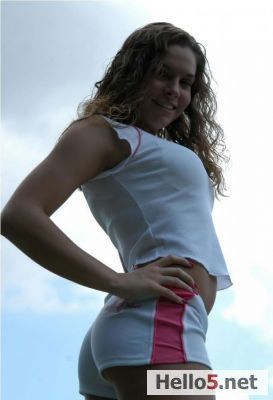
    Honoré de Balzac commented on Katrina Jordan's photo
    good morning y'all
    Honoré de Balzac
    Nov 29, 16:38
    This is what is meant by "natural beauty," a reflection of God's unique creation process.
    Honoré de Balzac
    Nov 29, 23:34
    The real person in the picture: https://x.com/rubyxrobusta
    Katrina Jordan
    Nov 30, 2:45
    yes its me
    Honoré de Balzac
    Nov 30, 11:39
    Then why is your name here on this site NOT Ruby Robusta?
    Denisa Luca (Denisaluca)
    Nov 30, 14:31
    Fake woman
    You need to sign in to comment

  • Honoré de Balzac
    This photo shows the evolution of trains in China over the past 30 years, and the engineer in the images is the same person. In 1992, Han Junjia was a young apprentice on a steam locomotive. The noise was deafening, the hot steam burned his face, and the soot followed him even into his sleep. He witnessed an era that was fading away, but also the beginning of a new one. Three years later, in 1995, Han became a diesel train engineer. For the first time, the cabin had a small luxury — a rear-view mirror and a rudimentary monitoring system. But the roar of the engines was so loud that engineers had to shout to hear each other. The real revolution came in 2008, when China electrified its railway lines. Trains began reaching 160 km/h, and the noise was replaced by an almost unreal calm. The journey became smoother, quieter — and, in a way, more human. In 2010, Han boarded a high-speed train for the first time. He said he felt as if he were in a spaceship. And in 2017, he took command of the Fuxing train, the symbol of Chinese modernity, which flies at 350 km/h. Throughout his career, Han Junjia obtained eight different licenses and personally experienced the transformation of an entire country. Today, when he looks at the digital control panel of his ultra-fast train, he remembers the steam, the diesel roar, and the cold meals eaten between stops. And he smiles.This photo shows the evolution of trains in China over the past 30 years, and the engineer in the images is the same person. In 1992, Han Junjia was a young apprentice on a steam locomotive. The noise was deafening, the hot steam burned his face, and the soot followed him even into his sleep. He wit...See more
  • Honoré de Balzac
    Honoré de Balzac uploaded 1 new photo to From Antalya - TÜRKİYE album

Quick Search

Main
to
Education
  •  
  •  
  •  
  •  
  •  
  •  
  •  
  •  
  •  
  •  
  •  
  •  
  •  
  •  
  •  
  •  
  •  
  •  
  •  
  •  
  •  
  •  
  •  
  •  

Social

'':
fade
slide
Rating: